Spay and Neuter Recovery: What to Expect Day by Day
Medically reviewed by Dr. Ahmad Waqas, DVM
MOCCAE Licensed · Senior Veterinarian, Pawspact · Last reviewed 19 April 2026
Quick Answer
Before you leave the clinic: what you'll receive
Before your pet goes home, you'll receive:
- A written discharge summary explaining what was done
- Pain medication with clear dosing instructions
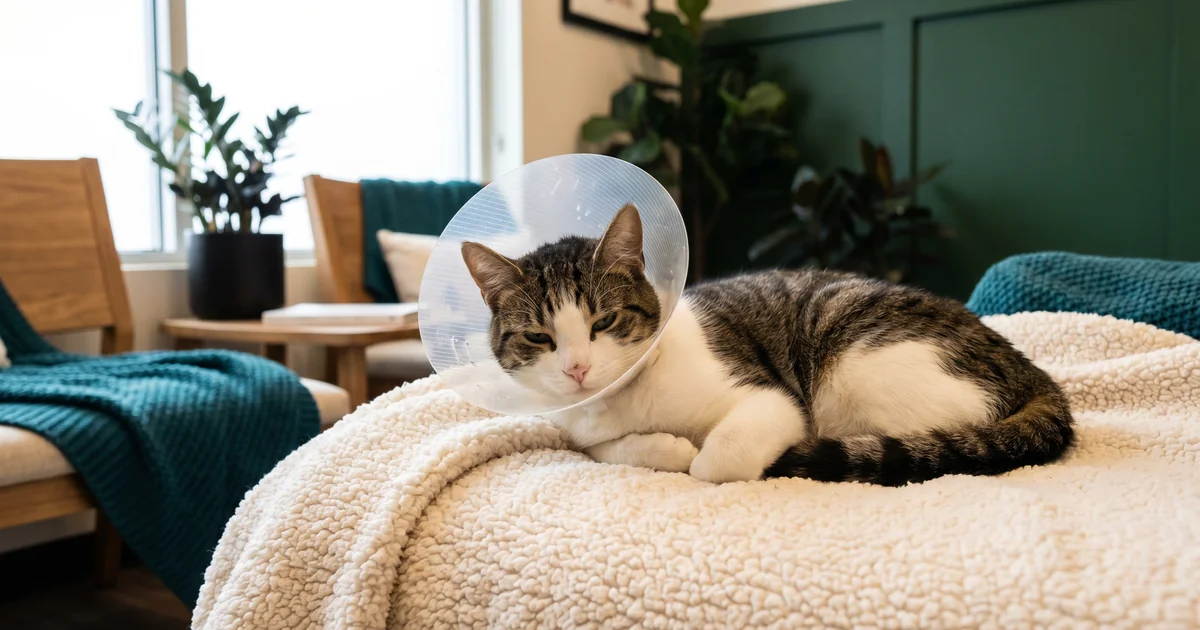
- An e-collar (cone) — fitted and explained
- Written aftercare instructions
- A scheduled follow-up appointment (typically day 7–10)
- A direct contact number for questions in the first 48 hours
Read everything before you leave. If anything is unclear, ask before you go home — not at 10 pm when you're worried.
Day-by-day recovery guide
Day 0 — surgery day
| What to expect | What to do |
|---|---|
| Groggy, wobbly, possibly disoriented | Keep in a quiet, warm, confined space |
| May shiver — normal response to anaesthesia | Offer a warm blanket; don't force contact |
| Probably hungry but stomach may be unsettled | Offer a small, light meal only (half normal portion) |
| Cone is on | Leave it on — do not remove it |
| May be quiet and withdrawn | Keep children and other pets away |
Days 1–3
| What to expect | What to do |
|---|---|
| Quieter than usual — mild lethargy is normal | Let them rest; don't encourage activity |
| Appetite may be reduced on day 1 | Offer normal meals from day 1; call if no eating by 24 hours |
| Incision may look slightly red or swollen | Check twice daily; call if it looks hot, discharging, or opens |
| May try to lick the incision | Ensure cone is on at all times, including when sleeping |
| Pain medication due | Give exactly as prescribed — even if your pet seems fine |
Days 4–7
| What to expect | What to do |
|---|---|
| Energy returning — may seem "back to normal" | Do not relax restrictions yet. Internal healing is still happening. |
| May try to jump, run, or play | Restrict to lead walks only (dogs); confine cats to one room |
| Incision should look better — less red, beginning to close | Continue twice-daily checks |
| Pain medication may be finishing | Complete the full course; don't stop early |
Days 7–10: follow-up appointment
At your scheduled follow-up, your vet will:
- Examine the incision
- Remove skin sutures if present (internal sutures dissolve on their own)
- Confirm whether the cone can come off
- Clear your pet for gradual return to normal activity
- Answer any questions about the recovery
Days 10–14: return to normal
Once the follow-up clears your pet, activity can gradually resume. Gradually — not immediately back to full exercise. For dogs, start with normal lead walks before returning to off-lead running or the dog park.
Activity restrictions: the rules
For cats
- Confine to one room for the first 5–7 days
- No jumping onto high surfaces (beds, sofas, counters) for 10–14 days
- No access to stairs if possible
- Use plain, unscented litter for the first 7 days
- Cone on at all times until follow-up clears it
For dogs
- Lead walks only for 10–14 days (toilet breaks, not exercise)
- No running, jumping, or rough play
- No swimming or bathing
- No dog parks or off-lead areas
- Cone on at all times until follow-up clears it
- Carry small dogs up and down stairs
Incision care: what normal looks like
| Normal | Call us immediately |
|---|---|
| Slight redness around the incision in the first 48 hours | Redness that spreads or worsens after day 3 |
| Mild swelling directly around the incision | Significant swelling, especially if warm to the touch |
| Small amount of clear or slightly pink discharge in first 24 hours | Yellow, green, or foul-smelling discharge at any time |
| Bruising in the skin around the incision | Active bleeding that doesn't stop with gentle pressure |
| Incision edges slightly raised | Incision opening — any gap in the wound |
When to call us immediately
- Excessive bleeding from the incision
- The incision opens (any gap in the wound)
- Persistent vomiting or refusal to eat past 24 hours post-surgery
- Refusal to drink water
- Extreme lethargy or unresponsiveness
- Breathing changes — laboured, rapid, or noisy breathing
- Pale, white, blue, or grey gums
- Anything that feels wrong
Pain management at home
Your pet will go home with prescribed pain medication. Here's what you need to know:
- Give the full course — even if your pet seems comfortable. Pain medication prevents pain; stopping early means pain may return.
- Give at the correct times — set a reminder if needed.
- Never give human painkillers. Paracetamol is toxic to cats. Ibuprofen is toxic to both cats and dogs.
- If your pet seems in pain despite medication — call us. We can adjust the protocol.
Feeding during recovery
- Day of surgery: Small, light meal only. Half normal portion. Plain food if possible.
- Days 1–14: Normal diet, normal portions. No special food required unless your vet advises otherwise.
- No treats that require vigorous chewing in the first few days.
- Fresh water must always be available.
For the complete guide to spay and neuter, see: Spay & Neuter in Abu Dhabi: A Vet's Complete Guide.
Frequently Asked Questions
Ready to Book?
Book a Consultation at Pawspact
MOCCAE-licensed veterinary care in Abu Dhabi. Transparent pricing, no hidden fees, and a team that treats your pet like family.