
TNR in Abu Dhabi: How Trap-Neuter-Return Programmes Work
Medically reviewed by Dr. Ahmad Waqas, DVM
MOCCAE Licensed · Senior Veterinarian, Pawspact · Last reviewed 20 April 2026
Quick Answer
What is TNR and why does it work?
TNR stands for Trap-Neuter-Return. It is the internationally recognised standard for managing community (feral and stray) cat populations humanely and effectively.
The alternative — lethal control (culling) — has been tried extensively and consistently fails. When cats are removed from a territory, new cats move in to exploit the available food and space. This is called the vacuum effect. The population rebounds, often within months.
TNR works differently. Sterilised cats remain in their territory, blocking new arrivals. Without reproduction, the population gradually declines. Behaviour improves — no more fighting, yowling, or spraying. The cats are healthier and less visible.
The three steps of TNR
Step 1: Trap
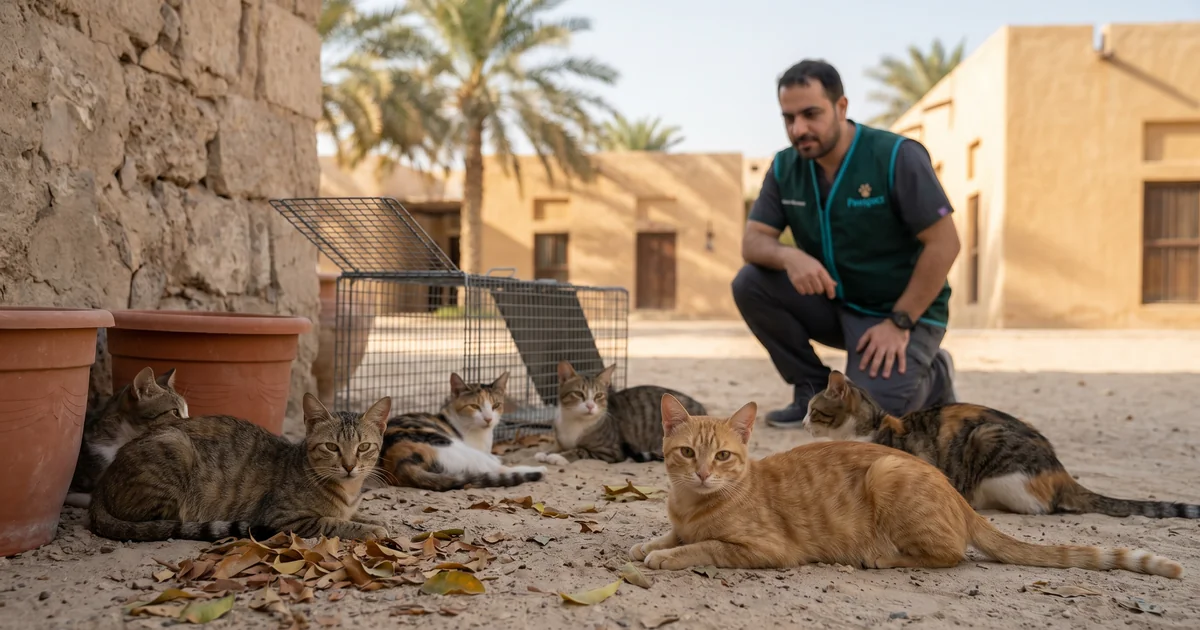
Cats are caught using humane box traps — wire cages baited with food. Trapping is typically done at dusk or dawn when cats are most active. Trapped cats are kept calm, covered, and transported to the clinic as quickly as possible.
- Use drop traps for cats that have learned to avoid box traps
- Never leave a trap unattended for more than 2 hours
- Cover the trap immediately after capture to reduce stress
- Transport in a covered vehicle, not in direct sun
Step 2: Neuter (and vaccinate)
At Pawspact, TNR cats receive:
- Full health examination
- Spay or neuter surgery under general anaesthesia
- Rabies vaccination (required by MOCCAE regulations)
- Treatment for any obvious health issues (wounds, parasites)
- Ear-tip — the universal identifier for a sterilised community cat
The ear-tip (a small, straight cut to the tip of the left ear) is done under anaesthesia and is painless. It is the internationally recognised sign that a cat has been sterilised and vaccinated. It prevents cats from being trapped and taken to a clinic unnecessarily.
Step 3: Return
Cats are returned to their original territory once they have recovered from surgery — typically the same day or the next morning for males, and within 24–48 hours for females. Returning cats to their territory is critical — they know the area, the food sources, and the social dynamics.
TNR in Abu Dhabi: the legal and regulatory context
The UAE Ministry of Climate Change and Environment (MOCCAE) regulates animal welfare and veterinary practice. TNR is consistent with MOCCAE's animal welfare guidelines and is supported by Abu Dhabi Municipality's approach to community animal management.
All cats treated at Pawspact as part of TNR programmes receive MOCCAE-compliant rabies vaccination and documentation. This is a legal requirement for any veterinary procedure in the UAE.
Who should consider TNR?
| Situation | TNR approach |
|---|---|
| Compound or villa community with a cat colony | Systematic trapping of all intact cats over 2–3 sessions |
| Single resident feeding a group of cats | Individual trapping over several nights |
| Business (restaurant, hotel, mall) with cats on premises | Coordinated programme with compound management |
| Rescue organisation managing multiple colonies | High-volume TNR with dedicated pricing |
| Municipality or developer managing a site | Full programme design and implementation support |
How to set up a TNR programme
1. Count and map the colony
Before trapping, spend a week observing. Count the cats, identify which are already ear-tipped (already sterilised), and note feeding times and locations. A rough map helps you plan trap placement.
2. Withhold food before trapping
Withhold food for 12–24 hours before trapping. Hungry cats are easier to trap. Do not withhold water.
3. Trap systematically
Aim to trap as many cats as possible in a short window — ideally all of them within 1–2 weeks. This prevents the remaining intact cats from becoming trap-shy.
4. Book in advance
Contact Pawspact before you start trapping to confirm availability. We can accommodate multiple cats on the same day for TNR programmes. Contact us to arrange.
5. Manage the colony long-term
After the initial TNR push, ongoing management includes:
- Structured feeding (set times, set locations, remove food after 30 minutes)
- Monitoring for new arrivals (un-ear-tipped cats)
- Trapping and sterilising new arrivals promptly
- Providing fresh water, especially in summer
- Reporting sick or injured cats for veterinary attention
TNR and Abu Dhabi's summer heat
Abu Dhabi's summer (May–September) presents specific challenges for community cats:
- Hydration is critical. Provide multiple water sources, refreshed twice daily.
- Shade is essential. Cats will seek shade instinctively — ensure shaded areas are accessible.
- Trapping in extreme heat requires extra care. Never leave a trap in direct sun. Trap at dawn or dusk only.
- Post-surgery recovery in heat. Cats recovering from surgery need a cool, shaded space. We can advise on temporary housing if needed.
For the complete guide to spay and neuter at Pawspact, see: Spay & Neuter in Abu Dhabi: A Vet's Complete Guide.
Frequently Asked Questions
Ready to Book?
Book a Consultation at Pawspact
MOCCAE-licensed veterinary care in Abu Dhabi. Transparent pricing, no hidden fees, and a team that treats your pet like family.